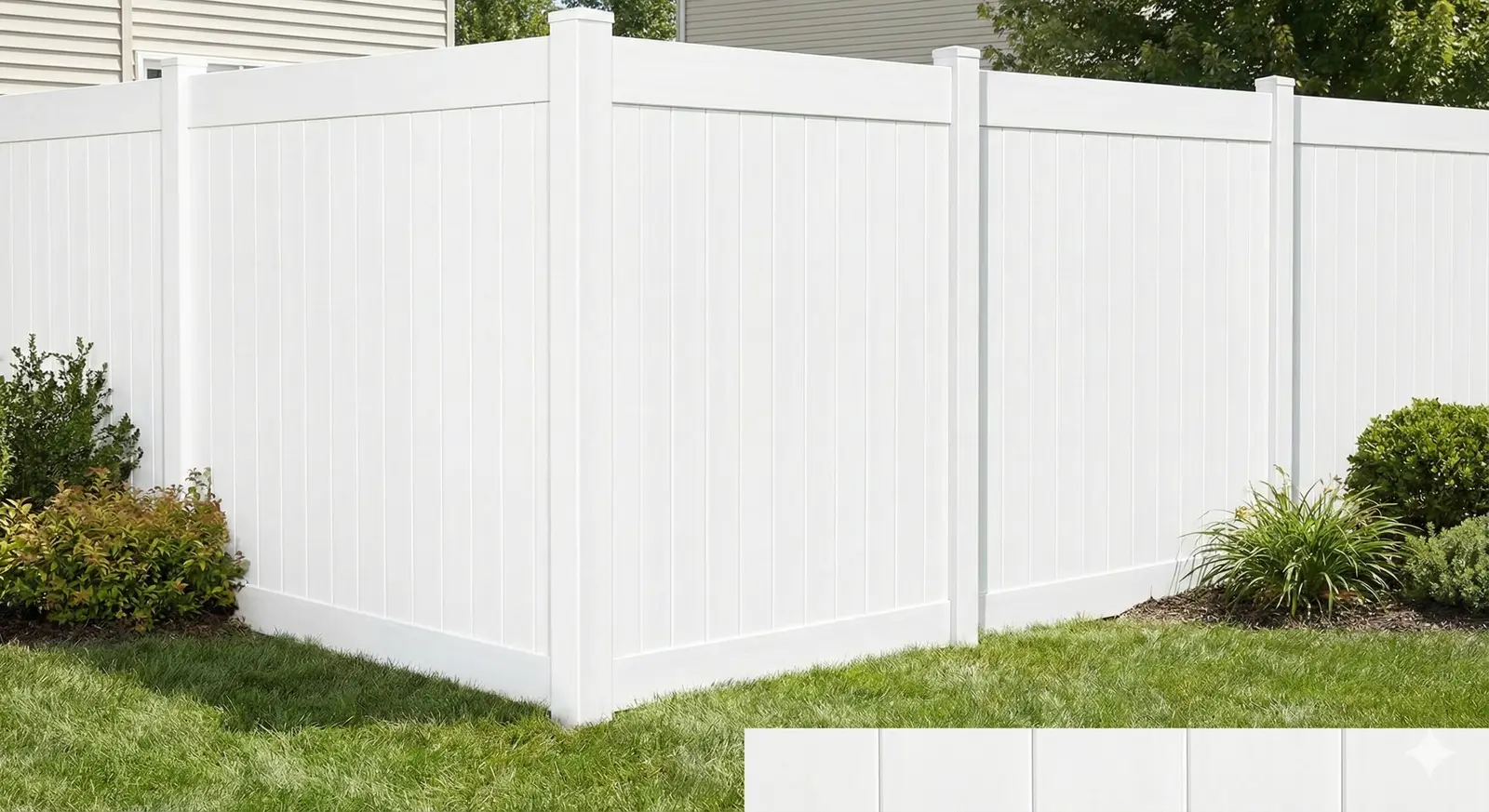
Every spring, homeowners across Wallkill, Middletown, Pine Bush, and Goshen start searching for fence installation near them, or wondering whether they should install their own fence. It is a fair question. Big-box stores sell pre-packaged fence panels that make the project look straightforward. But after years of replacing failed DIY fences across Orange County, we can tell you: what looks simple on a flat Kansas lot becomes a very different job on rocky Hudson Valley terrain.
When DIY fence installation can work
Let us be fair: not every fence project requires a professional crew. If your property checks all of the following boxes, a DIY installation might save you money:
- Flat, rock-free yard. If you can push a garden spade 42 inches into your soil without hitting stone, you have workable ground. Some lots along the Wallkill River floodplain and parts of Montgomery have softer alluvial soil that is easier to dig.
- Short runs under 50 linear feet. A small garden enclosure or a short section of picket fence along a front walkway is manageable for a handy homeowner with a post-hole digger.
- Simple materials like basic cedar picket or welded wire. These lighter materials do not demand the precision framing that vinyl privacy panels or heavy horse fencing require.
- No permit complications. If your project falls under 4 feet in height and sits well within setback requirements, you may not need a permit in many Orange County municipalities. Always check with your local building department first.
Ledge rock and boulders below the surface
The Hudson Valley is not the Midwest. Our geology, climate, and local regulations create obstacles that national fence guides never mention.
Anyone who has dug a garden bed in Crawford, Circleville, or the hills around Pine Bush knows about our rocks. Orange County sits on a mix of shale, limestone, and glacial till that can stop a post-hole digger cold at 18 inches. Professional fence contractors carry rock-drilling equipment, diamond-core bits, and pneumatic breakers that a homeowner would need to rent separately — often at $200 to $400 per day.
When we encounter rock on a job in the Town of Wallkill or up near the Shawangunk Ridge, we use helical anchors or core-drill directly into the ledge and epoxy-set the posts. A DIY homeowner hitting the same rock usually ends up with posts that are too shallow, which leads to leaning and failure within two to three years.
The 42-inch frost line problem
In Orange County, the frost line sits between 36 and 42 inches deep. Every fence post must be set below that depth or the freeze-thaw cycle will heave it out of the ground over winter. That means each post hole needs to be roughly 48 inches deep to allow for a gravel base below the concrete footing. Digging a single 48-inch hole by hand in rocky soil can take 45 minutes to an hour. A typical 200-foot residential fence has 25 to 30 posts. Do the math, and you are looking at two to three full days just digging holes — assuming you do not hit rock.
Professional crews use skid-steer-mounted augers and hydraulic post drivers that cut that timeline to a single day, even in difficult ground. The time savings alone often justify the labor cost, especially when you factor in equipment rental, concrete, and the very real risk of a back injury.
Two to three full days of digging, before a single panel goes up — assuming you never hit rock.
Orange County permits, surveys, and setback rules
Fence permits and regulations vary by municipality across Orange County, and getting them wrong can be expensive. A quick overview of what you are dealing with locally:
- Town of Wallkill: fences over 4 feet require a building permit. Setbacks from the property line vary by zone. Pool fences must be at least 48 inches with self-closing, self-latching gates per New York State code.
- City of Middletown: permits required for most fences. Front-yard fences are restricted to 4 feet maximum in many residential zones, and the building department can take two to three weeks to process applications.
- Town of Goshen: setback and height restrictions apply, especially in the historic district near the Village of Goshen. Fences visible from the street may require architectural review.
- Town of Crawford: agricultural zones have more flexibility, but residential subdivisions near Pine Bush often have HOA covenants that override town zoning and restrict materials, heights, and colors.
- Town of Montgomery: similar permit requirements to Wallkill. Properties near the Wallkill River corridor may have additional environmental setback requirements from the DEC.
A professional fence company that works in these municipalities every week knows each town’s requirements, can pull permits on your behalf, and ensures the fence is built to code the first time. We have seen homeowners in Goshen and Middletown get stop-work orders and fines because they did not realize their fence needed a permit, or they placed it too close to the property line.
The true cost of DIY vs. professional fence installation
DIY enthusiasts often compare only the material cost to a professional quote and assume they are saving 50 percent. The reality in Orange County is more nuanced. Here is what a typical 150-linear-foot vinyl privacy fence project actually costs:
| Expense | DIY estimate | Professional estimate |
|---|---|---|
| Fence materials (panels, posts, caps, hardware) | $3,000 – $4,500 | $3,000 – $4,500 (contractor pricing) |
| Concrete, gravel, fasteners | $300 – $500 | Included |
| Equipment rental (auger, level, saw, mixer) | $400 – $800 | Included |
| Permit fees | $50 – $100 | $50 – $100 (pulled for you) |
| Property survey (if boundary unknown) | $500 – $800 | $500 – $800 |
| Labor | Your time (3–5 weekends) | $2,500 – $4,500 |
| Call 811 / utility locate | Free, but you must schedule it | Handled by contractor |
| Estimated total | $4,250 – $6,700 plus your labor | $6,050 – $9,900 turnkey |
The gap narrows significantly once you account for equipment rental, your time, and the risk of costly mistakes. And if you hit rock on even a few post holes — extremely common in Wallkill, Crawford, and Pine Bush — the DIY cost can actually exceed a professional quote because of additional equipment rental days and wasted materials. Check our full 2026 fence cost guide for detailed pricing across every fence type.
Five signs you should definitely hire a fence contractor
- Your property has slopes, hills, or uneven terrain. Stepped or racked fence panels on a grade require precise measurements and custom cuts. Properties in the Shawangunk foothills near Pine Bush and the rolling hills around Goshen almost always have grade changes that demand professional layout.
- You need a fence taller than 6 feet. Deer fencing, security fencing, and commercial installations require deeper posts, stronger bracing, and sometimes concrete piers. An 8-foot deer fence with an improperly set post will not survive a Hudson Valley winter.
- You are installing vinyl or composite materials. Vinyl panels are unforgiving — a post that is off by even half an inch will cause the panel to bow or the rails to pop out. Professional installers use string lines, laser levels, and jigs that ensure every post is plumb and perfectly spaced.
- Your property borders a neighbor or public road. Boundary disputes are one of the most common fence-related headaches in Orange County. A professional crew will review your survey, confirm the property line, and keep the fence on your side. We have seen neighbors end up in costly legal disputes over fences placed 6 inches onto the wrong property.
- You need the fence done quickly. If you are closing on a home, preparing for a pool inspection, or need to contain a new dog before moving in, you cannot afford to spend weekends figuring it out. A professional crew will complete in two to three days what might take a homeowner a month of weekends.
Local resources and utility locates before you dig
Required Whether you go DIY or hire a contractor, you must call 811 before digging any post holes. New York requires at least two business days’ notice for utility locates.
In Orange County this is especially critical because Orange & Rockland Utilities, Central Hudson, and various cable and telecom providers all have buried lines that may cross your property. Hitting a gas line while digging a fence post is not just dangerous — it comes with significant fines and liability.
If you need a property survey to confirm your boundary lines, local surveyors familiar with Orange County parcel maps can typically schedule within a week or two. Expect to pay between $500 and $800 for a residential boundary survey.
What to look for in a fence contractor near Wallkill, NY
- Local experience. A contractor who works in Orange County every day understands our soil conditions, rock formations, frost depth, and municipal codes. National franchise operations often subcontract to crews unfamiliar with Hudson Valley terrain.
- Proper licensing and insurance. New York State requires home improvement contractors to register with the Department of Consumer Affairs in the county where they work. Ask for proof of general liability insurance and workers’ compensation coverage.
- Written estimates with material specs. A reputable contractor will provide a detailed written estimate that specifies the brand, grade, and warranty of every material. Avoid any company that gives you a verbal quote or a one-line estimate.
- References from local homeowners. Ask for references in your specific area. A fence that held up through five winters in Wallkill or Pine Bush tells you more than a photo from a flat suburban lot downstate.
- Willingness to handle permits. The best contractors will pull your permit, schedule the 811 utility locate, and coordinate any necessary inspections so you do not have to make multiple trips to the town building department.
The bottom line: protect your investment
A fence is one of the biggest outdoor investments you will make in your home. In Orange County’s challenging terrain and climate, cutting corners on installation almost always costs more in the long run. A professionally installed fence will stand straight, survive our winters, and add real value to your property for decades. A poorly installed DIY fence can lean, heave, or collapse within a few seasons — and replacing it costs more than doing it right the first time.
If you are a handy homeowner with flat, rock-free ground and a small project, a DIY fence can be a rewarding weekend accomplishment. For everything else — rocky soil, long runs, vinyl materials, slopes, or anything over 4 feet — trust a local professional who knows how to build a fence that lasts in the Hudson Valley.
Quick answers
- Frost line here: 36 to 42 inches. Post holes need about 48 inches.
- DIY makes sense: flat, rock-free ground, under 50 feet, under 4 feet tall.
- Skip DIY for: vinyl panels, slopes, anything over 6 feet, boundary-line runs.
- Always: call 811 at least two business days before digging.