
Why Deer Fencing Is Essential for Wallkill & Orange County Properties
If you own property in the Wallkill Valley, Pine Bush, or anywhere in Orange County, you already know the challenge: white-tailed deer are everywhere. The Hudson Valley's deer population has exploded over the past two decades, and the damage they cause to residential gardens, landscaping, and agricultural crops is significant. For many homeowners, professional deer fencing is not a luxury—it is a necessity.
The Real Cost of Deer Damage
A single deer can consume up to 10 pounds of vegetation per day. Multiply that by the herds commonly seen in Middletown, Goshen, and Montgomery, and the annual damage adds up fast. Ornamental shrubs like arborvitae, hostas, and daylilies are some of the first targets. Vegetable gardens can be wiped out overnight. Fruit trees that took years to mature can be stripped of bark and buds in a single season. According to Cornell Cooperative Extension, deer cause millions of dollars in damage to New York landscapes each year, and Orange County is one of the hardest-hit regions.
Why Sprays and Repellents Fall Short
Many homeowners try deer repellent sprays, motion-activated devices, or planting "deer-resistant" species before committing to a fence. While these measures can provide temporary relief, they rarely work long term. Deer adapt quickly to scent-based repellents, especially when hungry in late winter and early spring. Motion sprinklers lose effectiveness once deer learn they pose no real threat. The only proven, permanent solution is a properly installed physical barrier.
What Makes an Effective Deer Fence?
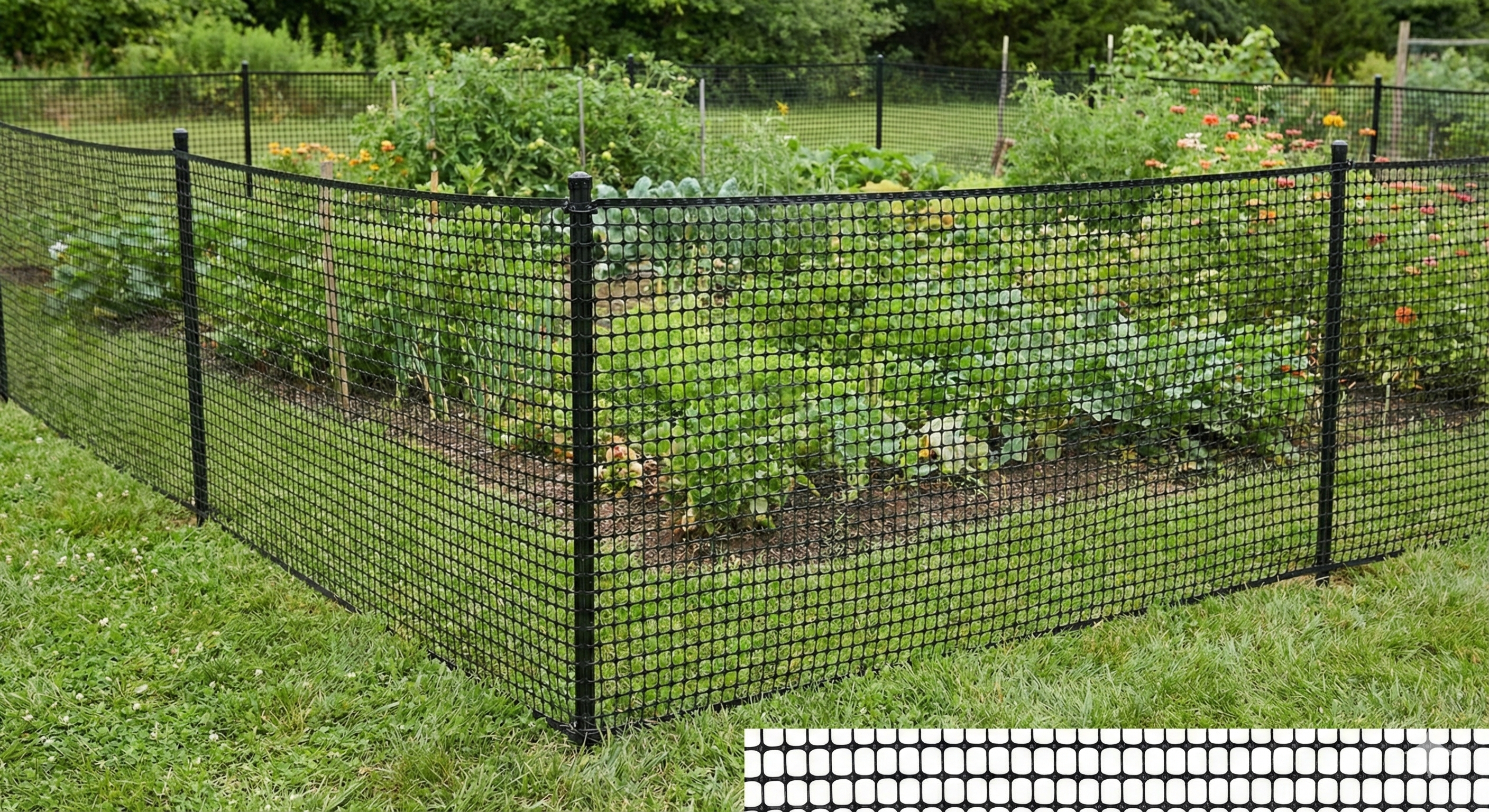
Deer are athletic animals. A healthy adult white-tailed deer can clear a 6-foot fence without much effort. That is why professional deer fencing must be a minimum of 7.5 to 8 feet tall. At Wallkill Valley Fencing, we install high-tensile polypropylene and woven wire deer fencing that stands 8 feet tall—the industry standard for effective deer exclusion in the Northeast.
Our preferred material is black vinyl-coated wire mesh. This is a critical detail: the black coating makes the fence nearly invisible against a backdrop of trees and woods, so it protects your property without ruining the view. The mesh is strong enough to withstand impact from a running deer, yet flexible enough to follow the contours of uneven terrain—something that is common throughout Orange and Ulster Counties.
Installation Matters as Much as Materials
A deer fence is only as good as its installation. Posts must be set deep enough to remain stable in the freeze-thaw cycles that are typical of Hudson Valley winters. At ground level, the fence must be staked or trenched to prevent deer from pushing underneath. Gates and access points need to be carefully designed so there are no weak points in the perimeter. Our team knows the rocky, root-filled soil conditions in Wallkill and Pine Bush, and we have the heavy equipment to set posts correctly even in the most difficult ground.
Protecting More Than Gardens
Deer fencing is not only for gardeners. Property owners with young orchards, nursery stock, or newly planted trees benefit enormously from perimeter fencing during the critical establishment years. Deer also carry ticks that transmit Lyme disease, and reducing deer traffic through your yard can meaningfully lower tick populations in your immediate area. For families with children and pets who spend time outdoors, that is a real health benefit on top of the landscape protection.
Ready to protect your property from deer damage?
Call Victor Baker at (845) 498-0200 for a free on-site estimate. We will walk your property, assess the terrain, and recommend the right deer fencing solution for your specific situation.